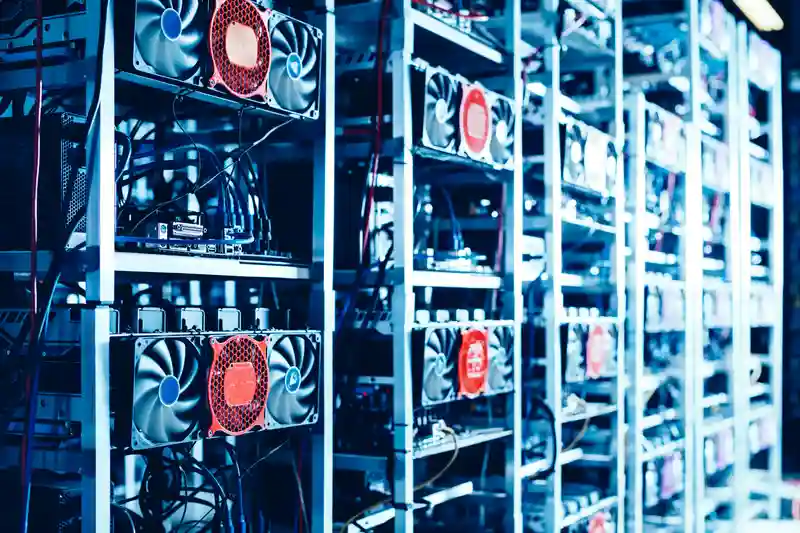
The modern world generates and processes more data than at any other point in human history. Scientific research, artificial intelligence, climate modeling, financial forecasting, pharmaceutical development, engineering simulations, and countless other fields now rely on computational capabilities far beyond what traditional computers can provide. As organizations tackle increasingly complex problems and process massive datasets, the demand for greater computing power continues to grow.
This need has led to the development and widespread adoption of High-Performance Computing (HPC). High-Performance Computing refers to the use of powerful computing systems that combine multiple processors, storage resources, and networking technologies to solve complex computational problems at extremely high speeds. Unlike standard desktop computers or even conventional servers, HPC systems are specifically designed to perform large-scale calculations and process vast amounts of information efficiently.
For decades, HPC has played a crucial role in scientific discovery and technological innovation. Researchers use supercomputers to model climate systems, simulate molecular interactions, analyze genomic data, and explore the origins of the universe. Businesses leverage HPC for risk analysis, product design, supply chain optimization, and advanced analytics. More recently, artificial intelligence and machine learning have emerged as major drivers of HPC demand, requiring substantial computational resources to train sophisticated models and process enormous datasets.
As computing challenges continue evolving, HPC is becoming increasingly important across industries. Organizations seeking competitive advantages often depend on high-performance computing infrastructure to accelerate innovation, reduce time-to-market, improve decision-making, and solve problems that would otherwise be computationally impossible.
Understanding HPC computing is essential for anyone interested in modern technology, scientific advancement, data-driven innovation, and the future of computational power.
What Is HPC Computing?
High-Performance Computing (HPC) refers to the practice of aggregating computing resources to deliver significantly greater processing power than traditional systems.
These systems are designed to solve complex computational tasks quickly and efficiently.
HPC environments often combine:
- powerful processors
- large memory resources
- high-speed networking
- advanced storage systems
Together, these components enable large-scale data processing and scientific computation.
Why High-Performance Computing Matters
Many modern challenges require immense computational capabilities.
Traditional computers may take weeks, months, or even years to complete certain calculations.
HPC systems can dramatically reduce processing times, enabling organizations to:
- accelerate research
- improve simulations
- analyze large datasets
- support innovation
The ability to process information quickly creates significant advantages.
The Evolution of High-Performance Computing
The history of HPC dates back several decades.
Early supercomputers were developed primarily for scientific and government applications.
Over time, advances in technology made high-performance computing more accessible to businesses, universities, and research institutions.
Key developments include:
- parallel processing
- distributed computing
- advanced networking
- cloud-based HPC services
These innovations continue expanding HPC capabilities.
How HPC Computing Works
High-performance computing achieves speed through the coordination of multiple computing resources.
Rather than relying on a single processor, HPC systems distribute workloads across many processors simultaneously.
This approach enables faster execution of computational tasks.
Parallel Processing
Parallel processing is a foundational concept in HPC.
It involves dividing large tasks into smaller components that can be processed simultaneously.
Benefits of Parallel Processing
Parallel execution can:
- reduce computation times
- increase efficiency
- support larger workloads
Many HPC applications rely heavily on parallel processing architectures.
Distributed Computing
Distributed computing involves using multiple interconnected systems to complete tasks collaboratively.
Resources work together to solve problems more efficiently than individual machines could alone.
Scalability Advantages
Distributed architectures allow organizations to increase computing capacity by adding additional nodes when needed.
Core Components of HPC Systems
Several key components contribute to HPC performance.
Each plays a critical role in supporting large-scale computation.
Compute Nodes
Compute nodes are the primary processing units within HPC systems.
Each node typically contains:
- processors
- memory
- local resources
Large HPC clusters may contain hundreds or thousands of nodes.
Processors
Processors perform computational tasks.
Modern HPC environments often use:
- CPUs
- GPUs
- specialized accelerators
These technologies support intensive workloads.
Central Processing Units (CPUs)
CPUs remain essential components of HPC systems.
They handle a wide range of computational tasks.
Graphics Processing Units (GPUs)
GPUs excel at parallel processing and are commonly used for:
- artificial intelligence
- machine learning
- simulations
- scientific modeling
GPU adoption has significantly increased HPC capabilities.
High-Speed Networking
Communication between nodes must occur rapidly.
HPC environments use specialized networking technologies designed to minimize latency and maximize bandwidth.
Why Networking Matters
Efficient communication ensures that distributed resources can collaborate effectively.
Poor networking can limit overall performance.
Storage Systems
HPC applications often generate and process enormous amounts of data.
Storage infrastructure must support:
- high throughput
- reliability
- scalability
Advanced storage systems help maintain performance.
Types of HPC Architectures
Different HPC architectures are designed to support varying workloads and objectives.
Cluster Computing
Cluster computing is one of the most common HPC architectures.
A cluster consists of multiple interconnected computers working together as a unified system.
Advantages of Clusters
Clusters offer:
- scalability
- flexibility
- cost-effectiveness
Many organizations use cluster-based HPC solutions.
Supercomputers
Supercomputers represent the highest level of computational performance.
These systems are designed to solve extremely complex scientific and engineering problems.
Characteristics of Supercomputers
Supercomputers often include:
- thousands of processors
- advanced networking
- massive memory resources
They support some of the world’s most demanding computational workloads.
Cloud-Based HPC
Cloud computing has transformed access to HPC resources.
Organizations can now obtain high-performance computing capabilities without building large on-premises infrastructures.
Benefits of Cloud HPC
Cloud-based HPC provides:
- scalability
- flexibility
- reduced capital investment
- on-demand resources
These advantages make HPC more accessible.
Common HPC Workloads
High-performance computing supports a wide variety of applications.
Scientific Research
Scientists use HPC for research involving:
- physics
- chemistry
- biology
- astronomy
Complex simulations often require substantial computational resources.
Climate Modeling
Climate scientists use HPC systems to simulate weather patterns and climate systems.
These models help improve forecasting and environmental research.
Artificial Intelligence and Machine Learning
AI workloads often require extensive computing power.
HPC supports:
- model training
- deep learning
- large-scale data analysis
AI has become a major driver of HPC adoption.
Engineering Simulations
Engineers use HPC to simulate:
- vehicle performance
- aircraft design
- manufacturing processes
- structural analysis
Simulation reduces development costs and improves efficiency.
Financial Services
Financial institutions use HPC for:
- risk modeling
- fraud detection
- algorithmic trading
- portfolio optimization
Fast computation provides competitive advantages.
Healthcare and Life Sciences
Healthcare organizations increasingly rely on HPC for:
- genomic analysis
- drug discovery
- medical imaging
- disease modeling
These applications support scientific advancement and patient care.
HPC and Artificial Intelligence
The relationship between HPC and AI continues to strengthen.
Many advanced AI models require enormous computational resources.
Training Large Models
Machine learning training often involves processing massive datasets through millions or billions of calculations.
HPC infrastructure helps reduce training times.
Accelerating Innovation
By providing greater computational capacity, HPC enables researchers to develop more sophisticated AI solutions.
Benefits of High-Performance Computing
Organizations adopt HPC because of its substantial advantages.
Faster Computation
HPC systems dramatically reduce processing times.
Tasks that might take days on conventional systems can often be completed in hours or minutes.
Improved Research Capabilities
Researchers can perform more complex analyses and simulations.
This accelerates discovery and innovation.
Enhanced Decision-Making
Faster access to insights supports better business and scientific decisions.
Greater Scalability
HPC systems can often be expanded to meet growing computational demands.
Competitive Advantages
Organizations that leverage HPC effectively may gain significant advantages in innovation and productivity.
Challenges of HPC Computing
Despite its benefits, HPC also presents challenges.
Infrastructure Costs
Building and maintaining HPC environments can require substantial investment.
Costs may include:
- hardware
- facilities
- networking
- storage
These expenses can be significant.
Energy Consumption
High-performance computing systems consume considerable amounts of energy.
Energy efficiency is an important consideration.
Complexity
Managing HPC environments often requires specialized expertise.
Organizations may need skilled professionals to operate and optimize systems.
Data Management
Large-scale workloads generate significant amounts of data.
Managing, storing, and analyzing this information can be challenging.
Security Considerations
Protecting valuable research and sensitive information is critical.
HPC environments require strong security measures.
The Rise of Exascale Computing
Exascale computing represents the next major milestone in HPC.
An exascale system can perform at least one quintillion calculations per second.
Why Exascale Matters
Exascale systems may enable breakthroughs in:
- scientific research
- medicine
- climate science
- artificial intelligence
These capabilities could transform multiple industries.
HPC in the Cloud Era
Cloud providers increasingly offer HPC services that make advanced computing accessible to more organizations.
Companies such as Amazon Web Services, Microsoft, and Google provide cloud-based HPC solutions that allow organizations to scale resources according to demand.
Cloud adoption is helping democratize access to high-performance computing.
The Future of HPC Computing
Several trends are shaping the future of HPC.
These include:
- exascale computing
- artificial intelligence integration
- quantum computing research
- cloud-based HPC expansion
- energy-efficient architectures
Innovation in these areas will continue expanding computational possibilities.
Frequently Asked Questions
What is HPC computing?
HPC computing refers to the use of powerful computing systems that combine multiple resources to perform complex calculations and process large datasets efficiently.
How does HPC differ from traditional computing?
HPC uses parallel processing, advanced networking, and large-scale infrastructure to achieve significantly higher performance than traditional systems.
What industries use HPC?
Industries including healthcare, finance, engineering, manufacturing, research, and artificial intelligence rely on HPC.
What is a supercomputer?
A supercomputer is a highly advanced HPC system designed to perform extremely complex calculations at very high speeds.
Why is HPC important for AI?
AI models often require enormous computational resources for training and analysis. HPC infrastructure helps accelerate these processes.
Final Thoughts
High-Performance Computing has become one of the most important technological foundations of modern innovation. From scientific discovery and climate research to artificial intelligence and advanced engineering, HPC enables organizations to solve problems that would be impossible using conventional computing systems. By combining powerful processors, high-speed networking, advanced storage, and parallel processing techniques, HPC delivers the computational performance needed to tackle increasingly complex workloads.
As data volumes continue expanding and computational demands grow, the role of HPC will only become more significant. Emerging technologies such as exascale computing, cloud-based HPC services, and AI-driven applications are pushing the boundaries of what is possible. Organizations that leverage high-performance computing effectively will be better positioned to accelerate innovation, gain valuable insights, and address some of the world’s most complex scientific, industrial, and technological challenges.